
Introduction to the School Kitchen Garden Project
The School Kitchen Garden project, as outlined in the Class 7 Vocational Education NCERT textbook (Kaushal Bodh), invites students to explore biodiversity and environmental conservation. Through this project, students will learn about various life forms that inhabit their school premises and nearby areas while designing a garden that fulfills the needs of different animal groups.
YouTube Resources for Project 2
To enhance your learning experience, we have compiled essential YouTube videos related to the School Kitchen Garden project. These include chapter readings in both English and Hindi, which will help students grasp the necessary concepts effectively. In addition, engaging video summaries and question-answer sessions (NCERT solutions) are provided to reinforce understanding.
Download Free PDF of the Chapter
For students seeking additional study materials, we offer a free downloadable PDF of the chapter. This resource contains detailed notes, project guidelines, and insights into the significance of biodiversity and conservation efforts. By utilizing these materials, students can deepen their understanding of the School Kitchen Garden project and cultivate their observational skills.
Click here to download Project 2: School Kitchen Garden PDF
Remember, this project not only focuses on gardening but also emphasizes the importance of environmental stewardship and the protection of natural habitats. Join us in this engaging educational journey that fosters a love for nature and sustainability!
Project 2: School Kitchen Garden NCERT Solutions | Question Answer
Page 31
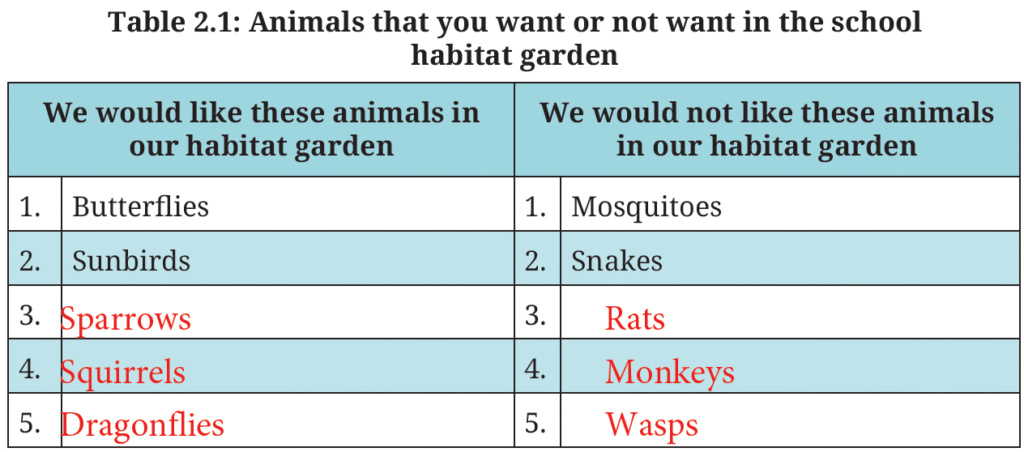
- Which of the animals identified in the surrounding of the school are likely to be attracted to our school habitat garden?
Answer: Animals like butterflies, sunbirds, sparrows, squirrels, ants, and dragonflies can be attracted to our school habitat garden if we provide food, water, shelter, and space for them. - How can we prevent the entry of animals we do not want in the school habitat garden?
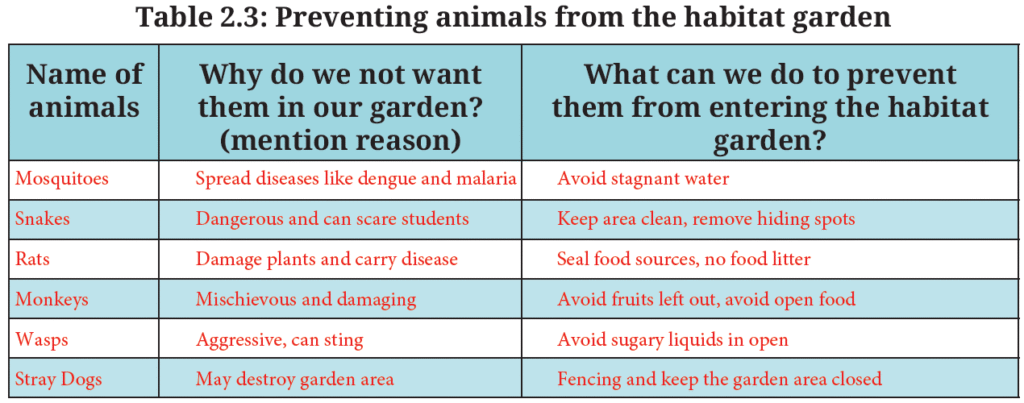
Answer: We can prevent unwanted animals like snakes or mosquitoes by avoiding stagnant water, keeping the garden clean, and not leaving piles of wood or trash where they can hide. - Where should the habitat garden be developed?
Answer: The garden should be developed in a quiet and open space in the school, like a corner of the playground or terrace, where sunlight is available, and there is less human disturbance.
Page 32
Page 34
Page 37
- Where will you make the habitat garden (e.g., any open unutilised space on the school grounds or a balcony/ terrace)?
Answer: We will make the habitat garden in an unused corner of the school ground or on the school terrace using pots and containers if ground space is not available. - How much sunlight does the space receive during the day? (e.g., does the entire area receive full sunlight or are some parts shaded. How many hours of direct sunlight does it receive?)
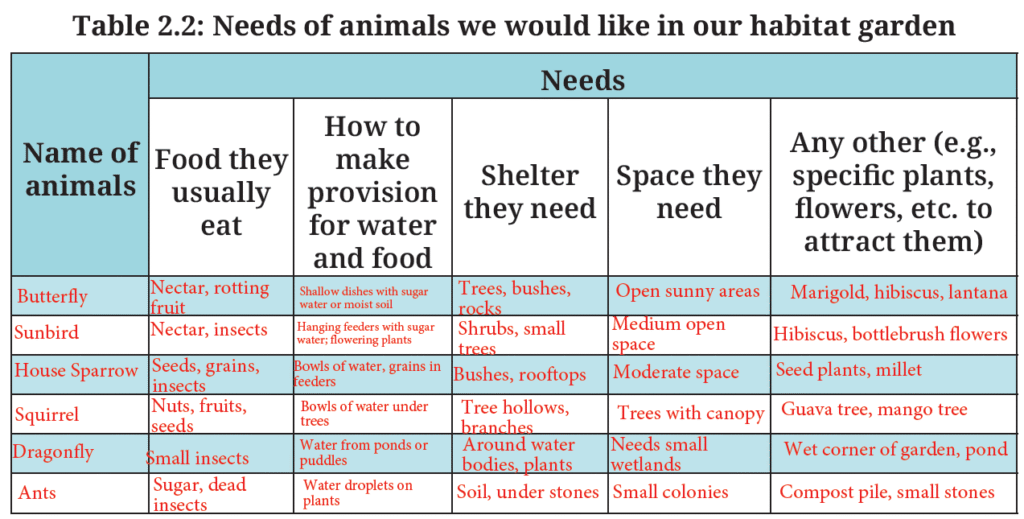
Answer: The selected area receives good sunlight for 5–6 hours. Some parts have light shade due to nearby trees, which is also helpful for shelter. - What specific elements do animals need to be attracted to your habitat garden? Consider features like flowering plants, rocks in sunny areas, plants that can ‘break’ the wind for butterflies, water collecting under a garden tap etc.
Answer: Animals need flowering plants, clean water in shallow containers, flat rocks for basking, damp mud for puddling, and trees or bushes to rest or hide. These elements make the garden friendly for birds, butterflies, and small animals.
Page 38
- Do any of the above already exist in the school? If yes, what are they?
Answer: Yes, our school already has some trees, bushes, and a tap near the garden area that sometimes leaks water. These will help attract birds and insects. - Are there any other aspects that need to be covered?
Answer: Yes, we need to build bird feeders, butterfly puddling spots, and insect shelters. We also need to create a proper walking path to avoid disturbing animals. - What kind of plants will need to be planted to attract animals, birds and insects to your habitat garden (e.g., seasonal flowering plants)?
Answer: We will plant seasonal flowering plants like marigold, hibiscus, sunflower, and herbs like tulsi and mint. These attract butterflies, bees, and birds. - How will you make sure you do not disturb animals while watering and weeding your garden (e.g., a walkway of sand or brick, areas for mudpuddling in a corner of the garden)?
Answer: We will create walkways using sand or bricks so that we don’t step on plants or disturb animals. We will do watering gently in the morning when animals are less active.
Page 44
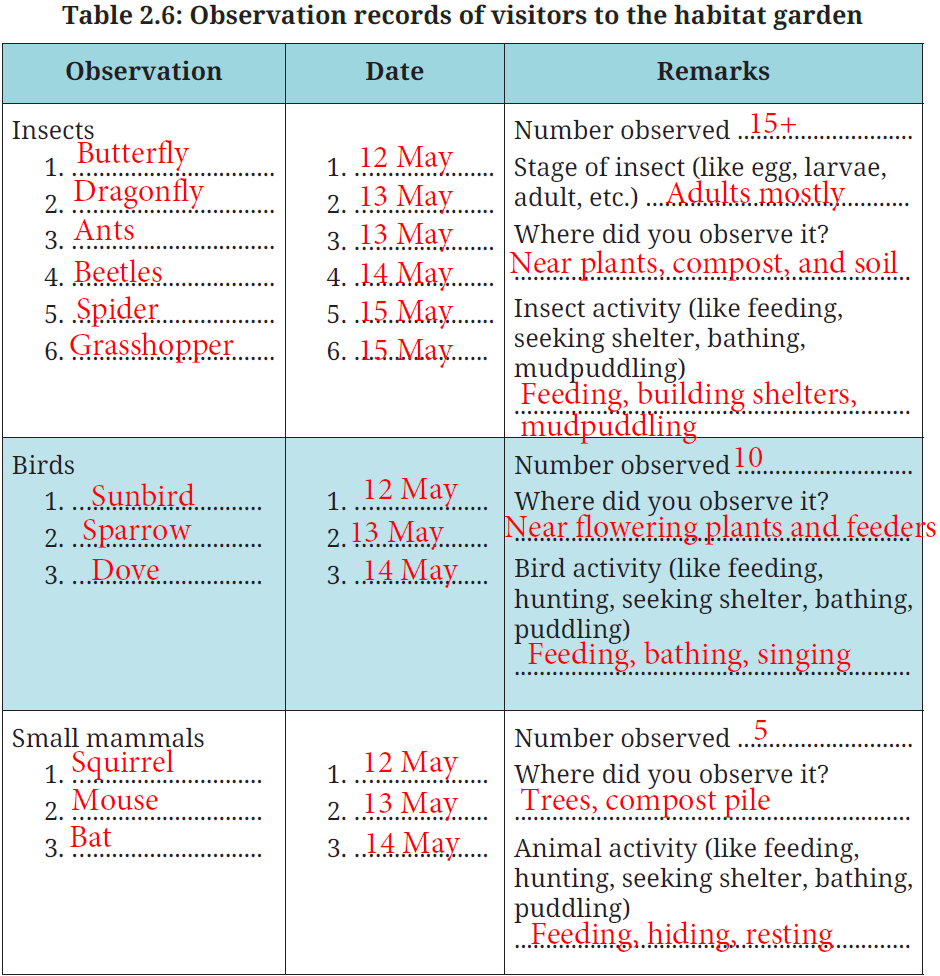
Page 45
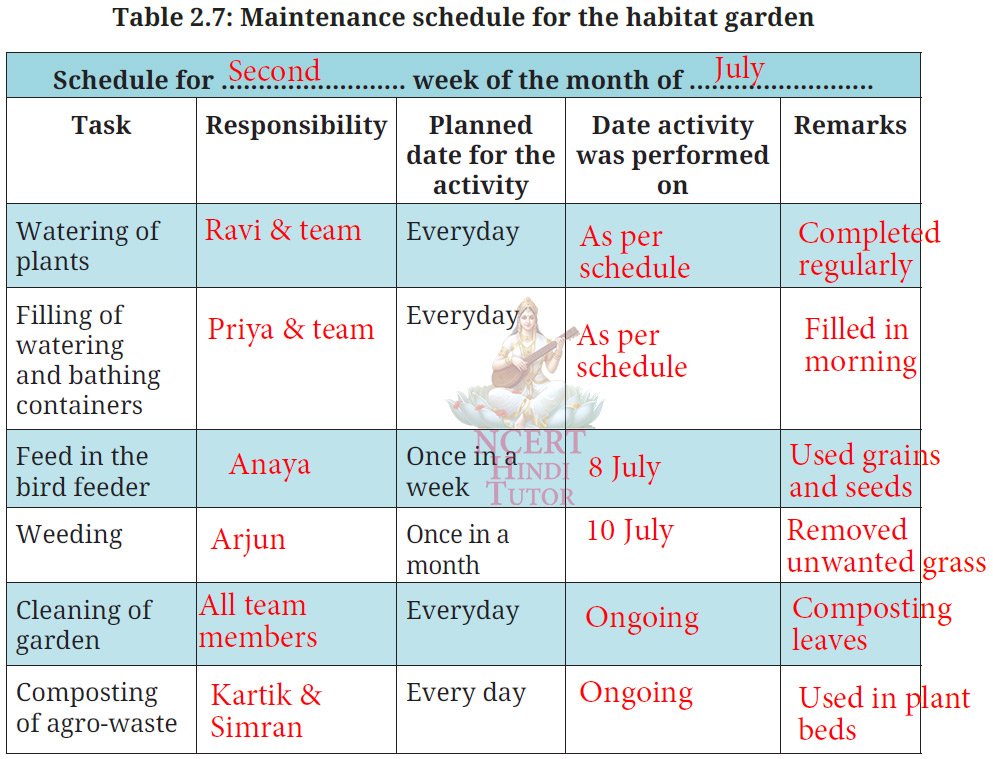
Page 46
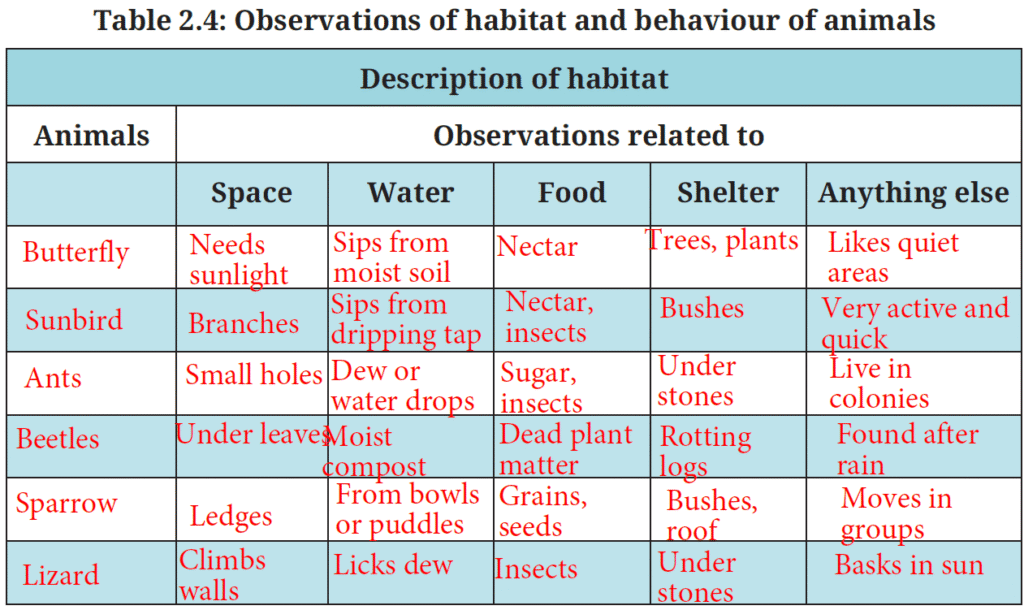
- What are three most fascinating things you have discovered?
Answer:
i. Butterflies drink water from wet soil (mudpuddling).
ii. Birds take dust baths to clean their feathers.
iii. Fireflies glow to communicate but are disappearing due to light pollution. - What key insights did you gain from observing and discussing about the living beings and their habitat?
Answer: I understood that all animals need food, water, shelter, and space. If we protect their habitat, they help us in return, like birds controlling insects and butterflies helping in pollination.
Page 48 – Think and Answer
- What did you enjoy doing?
Answer: I enjoyed planting new flowers, creating the butterfly feeder, and watching birds and insects come to the garden. - What were the challenges you faced?
Answer: We faced problems like watering the garden daily, avoiding mosquitoes, and keeping the place clean. - What will you do differently next time?
Answer: Next time, I will plan better to use water wisely, prepare a stronger fence, and include more shade-loving plants. - According to you, what is the importance of the habitat garden?
Answer: It helps small animals and insects find a safe home, improves biodiversity, and teaches us to care for the environment. - How do you plan to maintain the habitat garden after completion of project activities?
Answer: We will create a weekly schedule where each team member will take care of watering, cleaning, feeding, and checking plant health regularly. - Identify few examples of jobs related to the work you just did. For example, naturalist, conservationist, entomologist, zoologist, botanist, forest officer, environmentalist. Look around, speak to people and write your answer.
Answer: Some related jobs are:
• Naturalist – observes animals and nature.
• Conservationist – works to protect animals and forests.
• Entomologist – studies insects.
• Zoologist – studies animals.
• Botanist – studies plants.
• Forest Officer – protects wildlife in forests.
• Environmentalist – works to protect the earth.
